

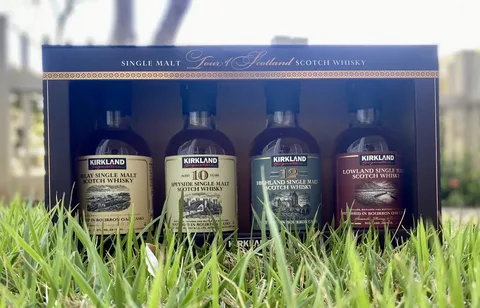
Kirkland Scotch has become one of the most discussed private-label spirits in the global whisky market. Unlike traditional Scotch brands built on centuries of distillery heritage and aggressive marketing, Kirkland Scotch operates on a value-driven model that prioritizes affordability, consistency, and wide consumer appeal. The brand challenges long-held assumptions that quality Scotch must come with premium pricing, forcing both casual drinkers and enthusiasts to re-evaluate how price, age, sourcing, and branding influence perceived quality. Understanding Kirkland Scotch requires more than tasting notes; it requires insight into Scotch production systems, independent bottling practices, Costco’s business model, and how value whisky fits into modern consumption habits.
Understanding The Kirkland Brand Philosophy
Kirkland Signature is not a distillery, nor is it a traditional spirits brand. It is a private-label identity used by Costco to deliver high-volume products at reduced margins. The philosophy behind Kirkland Scotch is rooted in cost efficiency rather than exclusivity. Packaging is intentionally simple, marketing is minimal, and distribution is limited to Costco warehouses. This approach allows a greater portion of production cost to be allocated toward the liquid itself rather than branding overhead. The result is a Scotch whisky that competes on quality per dollar rather than prestige.
Private Label Scotch And How It Works
Private-label Scotch operates differently from distillery-owned brands. Instead of producing whisky at a single site, private labels source matured whisky from established distilleries, blend or bottle it according to specific specifications, and release it under a separate name. Kirkland Scotch follows this model, working with independent bottlers who select casks, manage maturation profiles, and bottle the whisky for retail sale. This allows Kirkland to offer multiple styles, ages, and regions without owning distilleries or committing to long production cycles.
The Role Of Independent Bottlers
Independent bottlers play a critical role in Kirkland Scotch’s existence. These companies purchase mature whisky from distilleries that may have excess inventory or strategic reasons for selling stock anonymously. Independent bottlers then blend or bottle the whisky under non-distillery branding. This system benefits distilleries by monetizing surplus inventory while protecting brand positioning. For Kirkland, it provides access to well-aged Scotch at competitive prices. The anonymity surrounding exact distillery sources adds intrigue but also limits transparency, which influences how enthusiasts evaluate authenticity.
Scotch Whisky Classification Basics
To properly understand Kirkland Scotch, it is essential to grasp basic Scotch whisky categories. Blended Scotch combines malt whisky and grain whisky from multiple distilleries to create a consistent flavor profile. Single malt Scotch comes from one distillery and is made entirely from malted barley. Regional classifications such as Highland, Lowland, Speyside, and Islay describe geographical production areas with typical flavor tendencies. Kirkland Scotch offerings span multiple categories, including blended Scotch, blended malt, and single malt expressions, each designed to appeal to different drinker preferences.
Kirkland Blended Scotch Profile And Purpose
Kirkland blended Scotch is designed primarily for accessibility and versatility. The flavor profile tends to emphasize smoothness, light sweetness, and minimal peat influence. This makes it suitable for casual sipping, mixing in cocktails, or serving at social gatherings. Blended Scotch allows cost control because grain whisky is less expensive to produce than malt whisky. The blending process aims to balance affordability with drinkability rather than deliver complex or challenging flavor structures.
Kirkland Aged Blended Scotch Expressions
Some Kirkland blended Scotch offerings include age statements, which signal a minimum maturation period for all whisky used in the blend. Age statements typically improve mouthfeel, integration, and depth while maintaining approachability. These expressions appeal to consumers who want the reassurance of age without paying premium prices associated with well-known aged brands. The presence of an age statement also suggests a higher proportion of mature malt whisky within the blend.
Kirkland Single Malt Scotch Explained
Kirkland single malt Scotch offerings represent a shift toward enthusiast-oriented products. These whiskies are bottled from a single distillery and showcase regional characteristics more clearly. While the distillery name is not disclosed, the regional designation provides clues to the flavor profile. These expressions often carry higher alcohol content and more pronounced flavor structure compared to blends. Single malt Kirkland Scotch is positioned as an entry point into single malt appreciation rather than a collector’s item.
Regional Style Influence On Flavor
Regional classification influences the sensory experience of Kirkland Scotch. Highland expressions typically offer a balanced mix of fruit, malt, and light spice. Lowland styles tend to be softer, lighter, and more floral. Speyside-style expressions emphasize sweetness, orchard fruit, and gentle oak. Kirkland Scotch avoids heavily peated Islay styles, aligning with broader consumer preferences for approachable flavor profiles. Understanding these regional tendencies helps consumers select the right bottle for their taste preferences.
Cask Maturation And Flavor Development
Cask selection plays a major role in shaping Kirkland Scotch flavor. Most expressions rely on ex-bourbon barrels, which impart vanilla, caramel, and light oak notes. Some releases include secondary maturation in sherry casks, adding dried fruit, spice, and richness. The use of familiar cask types helps maintain consistency across large production volumes while appealing to mainstream palates. Cask influence is carefully controlled to avoid overpowering the whisky, prioritizing balance over intensity.
Alcohol Strength And Bottling Choices
Kirkland Scotch is typically bottled at standard alcohol strength, making it approachable for a wide audience. Standard bottling reduces production costs and ensures broad drinkability. While higher proof whiskies often attract enthusiasts seeking intensity, Kirkland’s strategy emphasizes smoothness and accessibility. Chill filtration and color consistency are common practices, reinforcing a clean, uniform presentation across batches.
Packaging And Presentation Strategy
Packaging for Kirkland Scotch is intentionally minimalist. Bottles feature straightforward labels with clear information about age, style, and origin. The absence of elaborate packaging reduces costs and reinforces the value proposition. For consumers, this simplicity signals practicality rather than luxury, aligning expectations with the intended drinking experience. The bottle design prioritizes shelf efficiency and recognizability within Costco environments.
Pricing Strategy And Market Positioning
Kirkland Scotch pricing is one of its most defining characteristics. By leveraging Costco’s purchasing power and high-volume distribution model, Kirkland Scotch undercuts traditional Scotch brands at comparable age and quality levels. This pricing strategy attracts both first-time Scotch drinkers and experienced consumers looking for everyday options. The brand positions itself as a smart purchase rather than an aspirational one.
Value Comparison With Traditional Scotch Brands
When compared with mainstream Scotch brands, Kirkland Scotch often delivers similar age statements and acceptable flavor quality at significantly lower prices. While it may lack the complexity or uniqueness of premium single malts, it frequently outperforms similarly priced competitors. This value equation challenges consumers to reconsider the relationship between price, branding, and enjoyment. Kirkland Scotch’s strength lies in delivering reliable quality rather than exceptional individuality.
Flavor Profile Consistency Across Batches
Consistency is a priority for Kirkland Scotch. Independent bottlers carefully blend casks to ensure minimal variation between releases. This consistency appeals to consumers who want predictable flavor experiences. While this approach limits batch uniqueness, it strengthens trust in the brand. For everyday drinking, consistency often matters more than novelty.
Serving Methods And Consumption Styles
Kirkland Scotch is designed to be versatile in how it is consumed. It performs well neat, over ice, or as a base for whisky cocktails. The approachable flavor profile makes it suitable for highball drinks, whisky sours, and simple mixed serves. This versatility broadens its appeal beyond traditional Scotch purists to include casual drinkers and social settings.
Cocktail Compatibility And Mixing Performance
The balanced nature of Kirkland blended Scotch makes it especially effective in cocktails. It provides enough character to remain identifiable without overpowering other ingredients. For whisky-based cocktails, this balance is essential. Single malt expressions are better suited for sipping but can still be used in elevated cocktails where subtlety is desired. The ability to serve multiple functions increases the practical value of each bottle.
Consumer Perception And Brand Trust
Consumer trust in Kirkland Scotch is influenced by Costco’s broader reputation for quality control. Many buyers approach Kirkland products with confidence based on positive experiences across other categories. This trust reduces hesitation and encourages trial, especially for consumers unfamiliar with Scotch whisky. Over time, consistent experiences reinforce brand loyalty.
Whisky Enthusiast Reception
Among whisky enthusiasts, Kirkland Scotch generates mixed reactions. Some appreciate the value and transparency regarding age statements and style. Others criticize the lack of distillery disclosure and limited complexity. Enthusiasts often view Kirkland Scotch as a practical option rather than a connoisseur’s choice. This positioning does not diminish its success but clarifies its intended audience.
Transparency And Sourcing Curiosity
One of the most discussed aspects of Kirkland Scotch is the mystery surrounding its sourcing. While the independent bottler is known, the distillery sources remain undisclosed. This secrecy fuels speculation but also limits the ability to evaluate terroir and production philosophy. For casual drinkers, this lack of transparency has little impact. For enthusiasts, it represents a missed opportunity for deeper engagement.
Shelf Availability And Limited Distribution
Kirkland Scotch availability is limited to Costco locations, creating regional variation in product offerings. Some expressions may appear in certain markets and not others. This limited distribution can create urgency and curiosity but also frustration for consumers seeking specific releases. Unlike traditional brands with global distribution, Kirkland Scotch remains intentionally constrained.
Quality Control And Batch Management
Quality control for Kirkland Scotch focuses on meeting consistent flavor and safety standards across large volumes. Independent bottlers monitor maturation, blending, and bottling processes to maintain uniformity. This industrial-scale quality management contrasts with small-batch craft whisky but aligns with Kirkland’s mission of reliability.
Aging Economics And Cost Efficiency
Aging Scotch whisky ties up capital for years, making older expressions expensive to produce. Kirkland Scotch manages aging economics by sourcing mature stock rather than aging whisky in-house. This reduces financial risk and allows competitive pricing on aged expressions. The trade-off is limited control over long-term maturation strategies, but the economic benefits are substantial.
Sustainability And Production Responsibility
While sustainability messaging is not prominent, Kirkland Scotch benefits indirectly from efficient logistics and large-scale operations. High-volume distribution reduces per-unit transportation costs, and minimal packaging reduces material waste. These efficiencies contribute to a lower environmental footprint compared to luxury spirits with elaborate packaging.
Long-Term Market Impact
Kirkland Scotch’s success has influenced how consumers perceive private-label spirits. It demonstrates that quality whisky can exist outside traditional branding frameworks. This shift pressures established brands to justify pricing and encourages transparency. Over time, Kirkland Scotch contributes to a more value-conscious and informed whisky market.
Choosing The Right Kirkland Scotch Expression
Selecting the right Kirkland Scotch depends on intended use and personal preference. Blended expressions suit cocktails and casual drinking. Aged blends offer smoother sipping experiences. Single malt options appeal to those seeking regional character. Understanding these distinctions helps maximize satisfaction and value.
Storage And Preservation Best Practices
Proper storage ensures Kirkland Scotch maintains quality over time. Bottles should be stored upright, away from direct sunlight and temperature fluctuations. Once opened, oxidation occurs gradually, but reasonable consumption timelines preserve flavor integrity. Good storage practices protect investment value and drinking enjoyment.
Comparing Kirkland Scotch To Other Private Labels
Compared to other private-label spirits, Kirkland Scotch stands out for consistency and age transparency. Many private labels focus purely on price, sacrificing quality. Kirkland’s model balances cost efficiency with acceptable production standards, setting a benchmark within the private-label category.
Educational Value For New Whisky Drinkers
Kirkland Scotch serves as an educational gateway for new whisky drinkers. Its approachable flavor profiles and affordable pricing encourage experimentation without financial risk. Trying different expressions allows consumers to explore styles and preferences before investing in premium bottles.
Limitations And Realistic Expectations
While Kirkland Scotch offers strong value, it is not designed to replace high-end single malts or rare releases. Complexity, uniqueness, and craftsmanship take time and investment. Understanding Kirkland’s purpose prevents unrealistic expectations and enhances appreciation for what it delivers well.
Final Assessment Of Kirkland Scotch
Kirkland Scotch represents a pragmatic approach to whisky consumption. It prioritizes accessibility, consistency, and value over prestige and storytelling. For everyday drinking, social occasions, and entry-level exploration, it delivers dependable performance. Its success lies not in competing with luxury brands but in redefining what affordable Scotch can be.
Conclusion And Long-Term Perspective
Kirkland Scotch has reshaped consumer expectations around private-label spirits. By combining efficient sourcing, consistent quality, and aggressive pricing, it offers a compelling alternative to traditional Scotch brands. Its role in the market is not to replace heritage distilleries but to provide a reliable, approachable option that expands whisky accessibility. As long as value, consistency, and trust remain priorities, Kirkland Scotch will continue to hold a strong position in the modern whisky landscape.

















Leave a Reply