

Egg-laying mammals are among the rarest and most fascinating creatures in the animal kingdom because they break one of the most commonly taught biological rules about mammals. Most people learn that mammals give birth to live young and nurse them with milk. Egg-laying mammals challenge this idea by combining reptile-like reproduction with mammalian traits. These animals belong to a very small and ancient group that represents an early branch of mammalian evolution. Understanding them requires looking beyond simple definitions and exploring anatomy, genetics, behavior, and evolutionary history in detail.
What Makes an Animal a Mammal
egg-laying mammals are so unusual, it helps to clarify what defines a mammal. Mammals are warm-blooded animals that typically have hair or fur, produce milk to feed their young, and have specialized ear bones and jaw structures. Live birth is common but not universal among mammals. Egg-laying mammals still possess mammalian traits such as milk production, warm-blooded metabolism, and complex nervous systems, even though they reproduce by laying eggs instead of giving birth to fully developed offspring.
The Classification of Egg-Laying Mammals
Egg-laying mammals belong to a group known as monotremes. This group is biologically distinct from placental mammals and marsupials. Monotremes are considered the most ancient surviving lineage of mammals. Their name comes from a single opening used for reproduction and waste, a trait shared with reptiles and birds. Despite this primitive feature, they are fully mammals based on genetics, physiology, and milk production.
Living Species That Lay Eggs
Only a few living mammal species lay eggs today. These include the platypus and several species of echidnas. All of them are native to Australia and nearby regions. The limited number of species makes them biologically rare and scientifically valuable. Each species displays unique adaptations that allow it to survive in its specific environment while maintaining egg-laying reproduction.
The Platypus as a Biological Paradox
The platypus is often described as one of nature’s strangest animals because it appears to be a mix of different species. It has a duck-like bill, webbed feet, dense fur, and lays eggs. Despite its unusual appearance, the platypus is a highly specialized mammal adapted for aquatic life. Its egg-laying ability is just one part of a complex biological system that includes electroreception, venom production in males, and advanced sensory processing.
Physical Characteristics of the Platypus
The platypus has a streamlined body designed for swimming, with webbed front feet that provide propulsion and a flat tail used for steering and fat storage. Its bill is not a beak but a soft, sensitive structure filled with electroreceptors that detect electrical signals from prey. This adaptation allows the platypus to hunt underwater with its eyes and ears closed.
Egg Production in the Platypus
Female platypuses lay one to three eggs at a time. The eggs are leathery rather than hard-shelled and are incubated inside a burrow. After laying the eggs, the mother curls around them to provide warmth and protection. The incubation period lasts about ten days, after which the eggs hatch into extremely underdeveloped young.
Milk Production Without Nipples
One of the most surprising aspects of egg-laying mammals is that they produce milk without nipples. Instead, milk is secreted through specialized skin glands and pools on the surface of the skin or in grooves in the fur. The hatchlings lap up the milk directly from the mother’s body. This system is considered an early evolutionary form of mammalian lactation.
Echidnas and Their Unique Adaptations
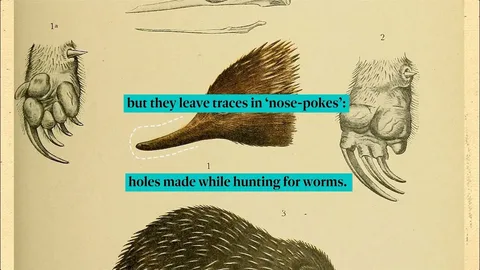
Echidnas, also known as spiny anteaters, are another group of egg-laying mammals. Unlike the platypus, echidnas are terrestrial and covered in spines that provide protection from predators. They have long snouts and sticky tongues adapted for feeding on ants and termites. Despite these differences, echidnas share core reproductive traits with the platypus.
Egg-Laying Behavior in Echidnas
Female echidnas lay a single egg and place it into a temporary pouch formed on the abdomen. The egg remains in the pouch until it hatches. After hatching, the young echidna, called a puggle, stays in the pouch and feeds on milk secreted through the skin. As the puggle grows and develops spines, it leaves the pouch and continues to nurse from the mother until it is more independent.
Evolutionary Significance of Egg-Laying Mammals
Egg-laying mammals provide critical insight into how mammals evolved from reptile-like ancestors. Their biology represents a transitional stage between reptiles and more modern mammals. Studying monotremes helps scientists understand how features such as milk production, warm-bloodedness, and complex brains evolved over time.
Genetic Insights from Egg-Laying Mammals
The genetic makeup of egg-laying mammals is a mosaic of traits seen in reptiles, birds, and mammals. Their genomes contain genes associated with egg production as well as genes responsible for lactation and fur development. This combination shows that mammalian traits did not evolve all at once but developed gradually over millions of years.
Reproductive Systems Compared to Other Mammals
Egg-laying mammals differ significantly from placental mammals and marsupials in their reproductive anatomy. Placental mammals develop embryos internally with the help of a placenta, while marsupials give birth to underdeveloped young that continue growing in a pouch. Egg-laying mammals bypass both systems by laying eggs and relying on external incubation followed by lactation.
Development of Hatchlings
Hatchlings of egg-laying mammals are extremely small and underdeveloped. They lack fur, have limited mobility, and rely entirely on their mother for warmth and nutrition. This stage highlights the importance of milk in mammalian survival and shows that lactation evolved before live birth.
Behavioral Patterns of Egg-Laying Mammals
These animals exhibit complex behaviors related to nesting, foraging, and parental care. Platypuses dig extensive burrow systems to protect their eggs, while echidnas adjust their movement and feeding patterns during the reproductive season. Such behaviors reflect a high level of adaptation and intelligence.
Habitat and Environmental Adaptations
Egg-laying mammals are adapted to specific environments ranging from freshwater rivers to arid landscapes. Their survival depends on specialized traits such as dense fur for insulation, efficient metabolism, and unique feeding mechanisms. Environmental pressures have shaped their reproduction and behavior over time.
Conservation Challenges
Because egg-laying mammals exist in limited geographic regions, they are vulnerable to habitat destruction, climate change, and human activity. Conservation efforts focus on protecting natural habitats, monitoring populations, and reducing environmental threats. Preserving these animals is crucial for maintaining biodiversity and understanding evolutionary history.
Scientific Importance in Modern Research
Egg-laying mammals continue to play an important role in scientific research. Their unique biology helps researchers study evolutionary development, genetics, and reproductive biology. Insights gained from these animals contribute to broader understanding in fields such as medicine, genetics, and ecology.
Common Misconceptions About Egg-Laying Mammals
Many people mistakenly believe that egg-laying mammals are primitive or less evolved. In reality, they are highly specialized animals that have successfully adapted to their environments. Egg-laying is not a sign of inferiority but an alternative reproductive strategy that has persisted through natural selection.
Differences Between Eggs of Mammals and Reptiles
While both lay eggs, mammalian eggs differ from reptilian eggs in structure and development. Mammalian eggs are typically smaller and more dependent on post-hatching care, especially through lactation. This distinction highlights the importance of parental investment in mammalian survival strategies.
Evolutionary Trade-Offs
Egg-laying mammals demonstrate that evolution involves trade-offs rather than linear progress. Their reproductive strategy offers advantages such as reduced internal gestation but requires significant post-hatching care. These trade-offs explain why egg-laying mammals remain rare but viable.
Why Egg-Laying Mammals Still Exist Today
The continued existence of egg-laying mammals shows that multiple reproductive strategies can coexist successfully. These animals have survived mass extinctions and environmental changes by occupying specialized ecological niches and maintaining effective survival mechanisms.
Educational Value of Egg-Laying Mammals
Egg-laying mammals are valuable teaching tools in biology education because they challenge simplified classifications. They encourage deeper thinking about evolution, adaptation, and diversity within life forms.
Role in Understanding Mammalian Origins
By studying egg-laying mammals, scientists gain insight into the earliest stages of mammalian evolution. These animals serve as living models of ancient biological processes that shaped modern mammals.
Future Research Directions
Ongoing research continues to uncover new information about egg-laying mammals. Areas of interest include genetic regulation of lactation, embryonic development, and adaptation to environmental changes. Future discoveries may further reshape understanding of mammalian evolution.
Key Takeaways for Readers
Egg-laying mammals are not biological anomalies but essential pieces of the evolutionary puzzle. They combine ancient reproductive methods with advanced mammalian traits, demonstrating the complexity of evolution. Their study enriches understanding of life’s diversity and adaptability.
Final Perspective
Egg-laying mammals occupy a unique position in the natural world. They defy expectations, challenge definitions, and provide invaluable insight into the origins of mammals. By exploring their biology, behavior, and evolution, we gain a deeper appreciation for how life evolves in diverse and unexpected ways.

















Leave a Reply