

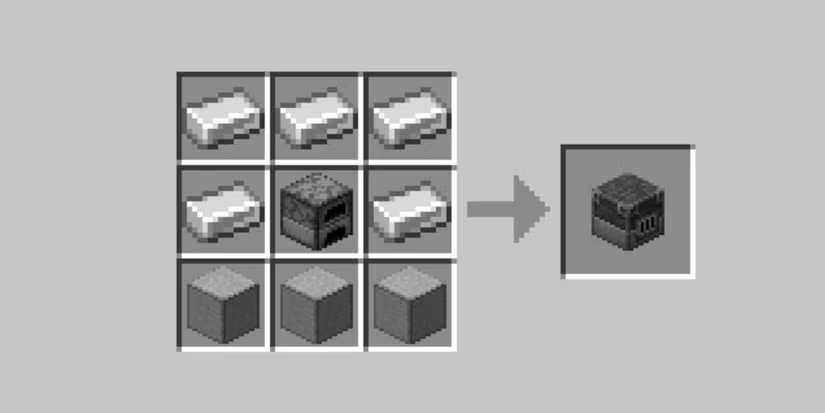
A blast furnace is one of the most efficient smelting blocks available for players who want faster processing and better resource management. Understanding the blast furnace recipe is not just about crafting the block but mastering how it works, when to use it, and how to integrate it into advanced systems. This guide explains everything from basic crafting to expert-level automation and optimization so you can fully utilize the blast furnace without limitations.
What Is a Blast Furnace and Why It Matters
A blast furnace is a specialized smelting block designed to process ores and metal-related items at a significantly faster speed than a regular furnace. Unlike standard furnaces, it focuses purely on metal-based materials, making it an essential tool for players who mine frequently and want to speed up progression. The blast furnace reduces waiting time, improves workflow efficiency, and plays a crucial role in large-scale smelting operations.
Blast Furnace Recipe Overview
The blast furnace recipe is simple but requires materials that may take some preparation to gather. It combines standard components with processed stone and iron, making it slightly more advanced than crafting a regular furnace. Once crafted, the blast furnace becomes a permanent upgrade for any base or industrial setup.
Materials Required for Blast Furnace Recipe
Crafting a blast furnace requires a specific combination of items that must be collected beforehand. Each material has its own importance in the recipe and cannot be substituted.
Iron Ingots
Iron ingots are the backbone of the blast furnace recipe. These are obtained by smelting iron ore in a furnace. A total of five iron ingots are required, making iron mining an essential prerequisite. Players are advised to mine iron veins efficiently and smelt them in batches to save fuel.
Smooth Stone
Smooth stone is different from regular stone and must be crafted carefully. First, cobblestone is smelted into stone. Then stone is smelted again to produce smooth stone. Three smooth stone blocks are needed, which means extra fuel planning is necessary.
Furnace
A standard furnace is required as the central component of the blast furnace recipe. This represents the core smelting mechanism and integrates with iron and smooth stone to form the upgraded structure.
Step-by-Step Blast Furnace Crafting Process
Crafting a blast furnace requires access to a crafting table and proper placement of materials.
Crafting Grid Arrangement
The furnace is placed in the center slot of the crafting grid. Iron ingots are placed in the top row and on both sides of the middle row. Smooth stone blocks are placed along the bottom row. Once the arrangement is correct, the blast furnace becomes available to craft instantly.
Common Crafting Mistakes to Avoid
Many players accidentally use stone instead of smooth stone, which prevents crafting. Others try to replace iron ingots with iron blocks, which also fails. Ensuring each material is exact is critical for successful crafting.
How the Blast Furnace Works
Once placed, the blast furnace operates similarly to a regular furnace but with key differences. It accepts fuel, input items, and produces output at double speed. However, it only smelts metal-related items, which limits its scope but enhances its efficiency.
Items That Can Be Smelted in a Blast Furnace
The blast furnace is designed for specific item categories and will not process all materials.
Ores and Raw Metals
Iron ore, gold ore, raw iron, raw gold, and ancient debris are compatible with the blast furnace. These items benefit the most from faster smelting speeds.
Metal Equipment and Tools
Iron armor, chainmail armor, iron tools, gold tools, and metal weapons can be smelted into nuggets. This is useful for recycling unwanted gear obtained from mobs or loot chests.
Items That Cannot Be Smelted
The blast furnace does not smelt food items, glass, clay, stone, or wood-based materials. Attempting to insert incompatible items will result in no processing.
Blast Furnace vs Regular Furnace
Understanding the difference between a blast furnace and a regular furnace helps determine when to use each one.
Smelting Speed Comparison
The blast furnace smelts items twice as fast as a standard furnace. This difference becomes noticeable during large smelting operations where time efficiency matters.
Fuel Efficiency Considerations
Although the blast furnace is faster, it consumes fuel at the same rate per item. This means faster output but no fuel savings unless combined with automation.
Practical Use Cases
The regular furnace remains useful for general smelting tasks, while the blast furnace excels in ore processing and metal recycling. Using both together creates an optimized smelting system.
Fuel Options for Blast Furnace
Choosing the right fuel directly affects smelting performance and efficiency.
Coal and Charcoal
Coal and charcoal are the most common fuels and provide reliable smelting performance. They are easy to obtain and ideal for early to mid-game usage.
Lava Buckets
Lava buckets offer long burn times and are perfect for large-scale smelting operations. However, they require careful handling and are not renewable early on.
Blocks of Coal
Coal blocks provide extended burn times and are best used in automated systems. They reduce manual fuel management significantly.
Alternative Fuel Sources
Items such as dried kelp blocks and blaze rods can also be used, offering flexibility depending on available resources.
Unlocking the Blast Furnace Recipe
The blast furnace recipe is unlocked when the player obtains smooth stone for the first time. This encourages progression through stone processing and teaches players advanced crafting mechanics naturally.
Villagers and Blast Furnace Integration
Blast furnaces play a major role in villager professions and trading systems.
Armorer Profession
Placing a blast furnace near an unemployed villager converts them into an armorer. This profession allows players to trade emeralds for iron armor, chainmail armor, and eventually diamond gear.
Trading Advantages
Using armorers provides access to enchanted gear without crafting it manually. This can save resources and time during progression.
Advanced Blast Furnace Optimization
Experienced players can push blast furnace efficiency far beyond basic usage.
Batch Smelting Techniques
Processing ores in large batches minimizes fuel waste and manual interaction. Preparing resources beforehand increases productivity.
Strategic Placement in Bases
Placing blast furnaces near storage systems and crafting areas reduces movement time and improves workflow.
Automation with Blast Furnace
Automation transforms the blast furnace into a high-output industrial machine.
Hopper Input and Output Systems
Hoppers can be used to insert items, extract smelted outputs, and feed fuel automatically. This eliminates the need for manual input.
Chest and Hopper Chains
Connecting multiple chests and hoppers allows continuous smelting without interruption. This setup is ideal for mining-heavy gameplay.
Redstone-Controlled Smelting
Advanced redstone circuits can regulate item flow, prevent overflow, and optimize fuel usage. This is useful for large automated bases.
Multi-Blast Furnace Arrays
Using multiple blast furnaces simultaneously increases throughput dramatically.
Parallel Processing Strategy
Setting up several blast furnaces side by side allows ores to be smelted in parallel, reducing processing time.
Load Balancing with Hoppers
Hopper minecarts or item sorters can distribute ores evenly across multiple furnaces for consistent output.
Storage Optimization for Blast Furnace Systems
Efficient storage prevents clutter and resource loss.
Item Sorting Systems
Automated sorting systems separate ores, ingots, nuggets, and byproducts for easy access.
Overflow Protection
Redstone comparators can detect full storage and halt smelting to prevent item loss.
Repairing and Recycling with Blast Furnace
Blast furnaces are excellent tools for recycling unwanted equipment.
Smelting Old Armor
Iron and gold armor can be smelted into nuggets, which can later be recombined into ingots.
Resource Recovery Benefits
Recycling helps recover materials from mob drops and loot chests that would otherwise be wasted.
Common Blast Furnace Mistakes
Avoiding mistakes improves efficiency and resource management.
Using It for Non-Compatible Items
Trying to smelt food or stone wastes time and causes confusion.
Ignoring Automation Potential
Manual usage limits productivity, especially in mid to late-game scenarios.
Poor Fuel Choices
Using inefficient fuel increases maintenance time and resource consumption.
Blast Furnace in Early Game Strategy
The blast furnace is achievable early if resources are managed properly.
Prioritizing Iron Mining
Focusing on iron early accelerates access to blast furnace crafting.
Smooth Stone Preparation
Smelting stone in advance prevents delays when crafting the blast furnace.
Mid-Game Blast Furnace Expansion
As gameplay progresses, blast furnace usage should scale.
Integration with Mining Operations
Placing blast furnaces near mining entrances allows immediate processing of ores.
Villager Trading Hubs
Using multiple armorers enhances gear availability and trading efficiency.
Late-Game Industrial Smelting Systems
In advanced stages, blast furnaces become part of massive industrial systems.
Fully Automated Smelting Lines
Complex redstone and hopper systems allow uninterrupted smelting for hours.
Resource Mega-Storage Integration
Connecting blast furnaces to bulk storage ensures seamless material flow.
Comparing Blast Furnace with Other Smelting Blocks
Each smelting block has a specialized role.
Blast Furnace vs Smoker
The smoker processes food faster, while the blast furnace focuses on metals.
Blast Furnace vs Furnace
The regular furnace remains versatile, but slower for metal processing.
Performance Tips for Maximum Output
Optimizing blast furnace usage improves overall efficiency.
Fuel-to-Item Ratio Planning
Matching fuel burn time with item batches minimizes waste.
Smelting Queue Management
Keeping a steady input flow avoids idle time.
Troubleshooting Blast Furnace Issues
Sometimes blast furnaces do not work as expected.
Recipe Not Unlocking
Ensure smooth stone has been crafted at least once.
Smelting Not Starting
Check fuel compatibility and item type.
Automation Failures
Verify hopper directions and storage capacity.
Long-Term Benefits of Using Blast Furnace
The blast furnace is not just a convenience block but a strategic investment.
Time Savings
Faster smelting means more time for exploration and building.
Resource Optimization
Efficient processing reduces fuel waste and improves output consistency.
Gameplay Progression Support
Blast furnaces support mining, trading, automation, and late-game industrialization.
Final Thoughts on Blast Furnace Recipe Mastery
Mastering the blast furnace recipe is a key step toward efficient resource management and advanced gameplay. From crafting the block to building fully automated smelting systems, the blast furnace provides unmatched speed and specialization. By understanding its mechanics, optimizing fuel usage, integrating automation, and avoiding common mistakes, players can unlock its full potential. Whether used in a small starter base or a massive industrial complex, the blast furnace remains one of the most valuable tools for serious progression and long-term efficiency.







Leave a Reply